Prior to what became known as the Sexual Revolution, the concept of sex– even just discussing the topic amongst one’s own family in their own private home, was stigmatized. However, the advancement and growth of social norms in the United States through these past decades and centuries can all be attributed to one factor: industrialization.
Technological advancements change society by pulling people to adapt to the new ways of the future, like a universal magnet. When industrialization hit the United States during the late nineteenth and early twentieth centuries, the rise of machinery and factories caused a substantial increase in the city population, as everyone scurried over from the rural areas to urban areas for job opportunities offered by the new technological equipment. The rise of industrialization not only brought significant change to the U.S. society’s technological capabilities, but as random as it may initially sound, sexuality was also impacted by this new era.
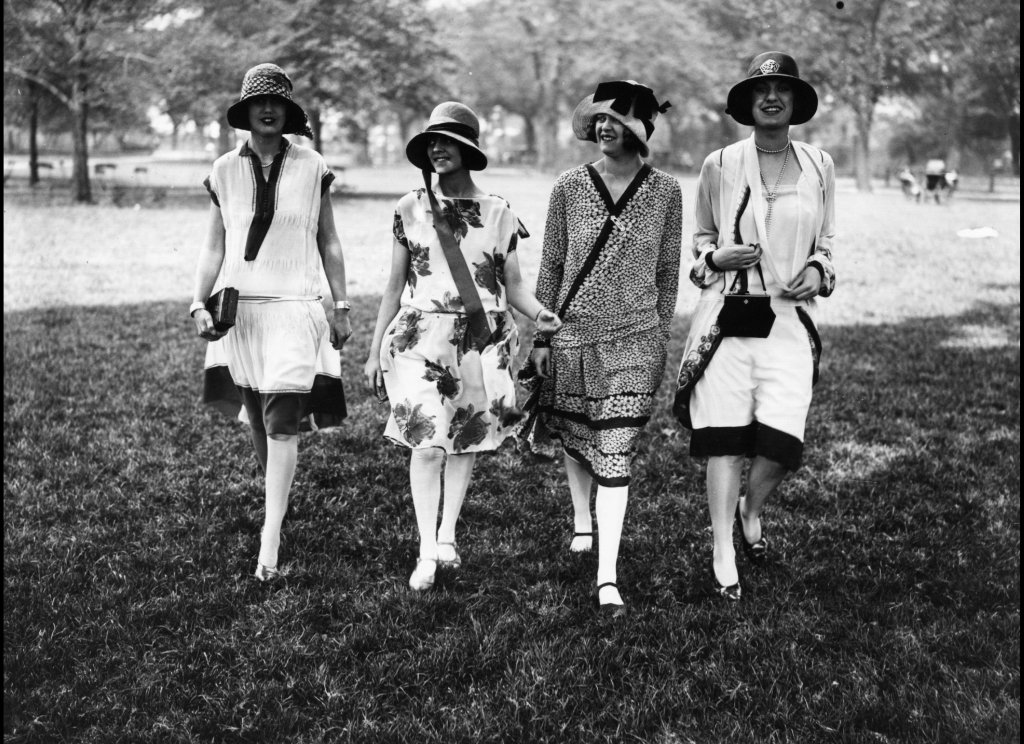
In the 1920s, with the separation of families due to the wave of migration from rural to urban areas, women found themselves within a new environment of sexual freedom in the cities.
Americans steadily began to let go of traditional cultural values, as the importance of virginity and waiting until marriage to have sex began to lessen as the Sexual Revolution, also known as the Roaring Twenties, came to life. It became widely accepted within U.S. society that women did not exist for the sole purpose of childbearing, but that they should be allowed to have sex for pleasure, dance freely, and be flirtatious without facing the risk of being publicly shamed. In other words, accepting sexuality among women slowly started to become the norm.
Additionally, in the 1960s, technological advancements in the form of birth control pills allowed for protected sex to be convenient, which not only allowed sex to occur more often on a casual basis, but also decreased the birth rate in the United States. This decrease in the U.S. birth rate is significant towards the equality of women because without contraception, women had a much higher chance of getting pregnant after sexual activity and having to take on the responsibility of raising a child, which has costs to both a woman’s time and opportunities and their overall freedom to pursue life outside the world of motherhood. This shift in attitude and meaning towards sex affected women much more compared to men. Prior to the Sexual Revolution, women would often be shamed if they’d had sex before marriage or with more than one man, while men would be praised for doing the same thing. The Sexual Revolution challenged this double standard, as the new era had finally begun to grant women the right and freedom to engage in sex in a pleasurable way (Takemoto).
However, while a large share of America was looking ahead and rushing the progressive social advancement of society, the leftover portion of fundamentalist citizens decided they could not simply shake their heads and accept this decrease in the importance of traditional values. Instead, the Sexual Counterrevolution was formed. Counterrevolutionists saw the new openness women had towards their sexuality disturbing and morally violating. Thus, members called for the return of “family values” and traditional morals by objecting to the idea of “free love”, cohabitation, and unmarried couples having children. At the end of the day, however, the Sexual Counterrevolution did not bring significant change to progressive minds of society, as the concept of sexual freedom for women continues to gain support across the United States.
It is clear from these opposing views on sexuality shown by the Sexual Revolution and the Counterrevolution that the United States is of two minds– for any idea or stance, there will always be an opposition. A part of the U.S. during the 1920s represented permissive minds when society began opening up to the freedom of women’s sexuality. The other half, however, associated themselves with the restrictive minds of the U.S. as expressed by their support for the counterrevolution and the upholding of traditional values.
Moreover, this concept of 2 different viewpoints is still clear as day in today’s society. One example where this concept appears is in the Body Positivity Movement that has been very popular amongst teens and young adults throughout social media these past few years. This movement promotes the normalization of bodies of all colors, sizes, textures, and shapes. The essential goal of this movement, according to The Body Positive, an organization founded in 1996 devoted to increasing positive body image, is to “end the harmful consequences of negative body image that can result in eating disorders, depression, anxiety, substance abuse, and other mental health issues” (“Our Work”). This movement, which is largely supported by women, dismantles the traditional standards of beauty by supporting videos of plus size bodies in bikinis on Tiktok, positively reacting to Instagram posts without skin-smoothing filters, embracing stomach rolls in seated positions, and various additional forms of expressing and spreading confidence in all body types. Correspondingly, body positivity reflects the same type of increasing sexual freedom among women that the permissive Roaring Twenties brought about.
However, critics of the movement say that the presence of body positivity does more harm than good, as they see the movement as promoting obesity and “unhealthy” living diets and habits, as well as allowing too much “unnecessary” exposure of womens’ body types, textures, and hair. These critics tend to hold more conservative and traditional values, believing that women’s bodies should be covered up and continue falling in line with the typical thin and slim beauty standards, aligning much with the Sexual Counterrevolution’s restrictive mindset.
Personally, I think that the Body Positivity Movement is effective in creating a positive community of diverse body types, sizes, and colors. However, I also think that the movement has its flaws. First of all, the goal of body positivity is largely centered around female bodies, and gives less attention to male and genderqueer body image struggles. This is important because people of differing genders struggle in different ways in terms of their body image. For example, while ideal body standards differ from culture to culture, some common body image ideals for women widely observed by the majority of cultures around the world include a flat stomach, smooth skin, and overall slim bodies. On the other hand, ideal body standards for men primarily consist of features such as weight gain, the building of muscle mass, and the achievement of a “v” shaped body (Avci and Akliman 2, 2018). I believe that the problem with the Body Positivity Movement is that it fails to acknowledge male and genderqueer body image issues, which can inflict upon individuals the same mental health consequences that women face due to feeling insecure of one’s own body.
In short, I think it’s important to take into account all genders when bringing about body positivity. This is not to say that women and men, for example, struggle equally in terms of body-image issues, as multiple studies have concluded that women experience greater body-image issues than men (Quittkat, 2019). While this distinction is notably prevalent, I feel that the Body Positivity Movement would gain much more support if it would open up to the diversity of body issues across both cisgender and genderqueer identities. Additionally, while my opinion does not align 100 percent with either of the two given sides of the Body Positivity Movement– those that fully support the movement in its current fashion and those that oppose it–, I find my feelings geared largely towards the supporters of body positivity, as we both share the same permissive mindset, just through different lenses. Overall, not every opinion is perfectly the same, but opinions of the United States tend to almost always fall into the same two categories– permissive and restrictive viewpoints.
Furthermore, sexuality is an even more complex topic due to the fact that it plays a role in enhancing social inequality in our society. As expressed by the Social-Conflict and Feminist theories of sexuality, sexuality reflects social inequality by demeaning women in the sex industry. For example, in the case of prostitution, police are far more likely to arrest female prostitutes than male clients– though both committed illegal acts. Additionally, the fact that the majority of sellers are female, while the majority of clients are male further establishes the outdated belief that men have power and control over women and their bodies. In addition, pimps, also known as people who have control over one or more prostitutes as well as their money, are almost always male. The exploitation of women in prostitution along with the fact that position and power in this industry is held by men perpetuates gender inequality through this unequal dynamic of power.
An important point to note is that while there are female prostitutes, there are also men prostitutes. In a survey studying punishments received by male (45% of the 100% surveyed) and female (55% of the 100% surveyed) prostitutes who had been arrested once for prostitution, it was revealed that females receive harsher punishment for the same acts. The study found that 82% of female prostitutes reported receiving jail time, while only 63% of male prostitutes reported receiving jail time for the same crime. Additionally, while men receive larger fines and probation terms compared to women, women typically receive longer jail sentences than men. Longer jail time can have a number of negative social consequences, including stigma towards these female prostitutes, displacement of children into the care of other relatives, and unemployment (Pfeffer, 2018). Overall, this concept where women are both controlled by men as well as receiving longer jail sentences than men limits the freedom of women, and thus perpetuates gender inequality.
Moreover, the issue of pornography also proposes that sexuality plays a part in social inequality through the degradation of women. This widespread and billion dollar industry, which mostly consists of male viewers, perpetuates violence against women and enforces the idea that women are objects to be under the rule of a dominant male. Data collected and analyzed by the Marriage and Religion Research institute reveals that males who view pornography are more likely to refer to women in sexual terms rather than personal attributes. This objectification of women is not only demeaning, but also harmful to the safety of women, as the study also states that men who watch porn are more likely to commit rape, engage in sexual harrassment, and perform acts of sexual aggression (“Pornography Objectifies Women” 1). In conclusion, violent and sexual behavior depicted through pornography fuels gender inequality by degrading the social relevance of women.
Furthermore, restrictive viewpoints largely dominated the pre-industrial society, and characteristics of this mindset continue to exist today in the form of heterosexism. Heterosexism is the discrimination against anyone with a sexual orientation other than heterosexuality, as supporters of this concept believe that being heterosexual is the only “normal” sexual orientation. This discriminative belief has affected gay and intersexual people in very harmful and oppressing ways throughout history, and continues to do so today.
A practice known as Conversion Therapy, which unfortunately exists in our present society, was first introduced in 1899 by German Psychiatrist Albert Von Schrenk-Notzing, who launched the harmful emotional and physical techniques used on patients during conversion “therapy” to try and “convert” them from homosexuality to heterosexuality (Blakemore, 2018). This horrific process promoted heterosexism by encouraging the belief that being homosexual was an illness to be cured. In addition, heterosexism affects intersexual people in a similar way, as the existence of intersexual people can often go unacknowledged or discriminated against in a belief where only man-to-woman exists. As we can see, heterosexism labels gay and intersexual people as unnatural and inherently deviant. This is not only harmful for their social image, but also threatens the safety of these individuals, as these prejudice ideas can increase the risk of discrimination as well as hate crimes towards gay and intersexual people, given that members of the LGBTQ+ community are nine times more likely than non-LGBTQ+ individuals to be victims of hate crimes (Flores et al., 2022).
Further, relating to the topic of sexual orientation, the acceptance towards specifically sexual behavior (the action of engaging in sexual activity) remains an important topic to discuss in our country’s growing society. Back in 2019, a Senate Bill known as SB 145, which altered the punishment towards adults who engage in oral and/or anal sex with a minor, was passed by the California Legislature. The bill quickly became a highly controversial subject once a random Twitter post went viral claiming that this bill “legalized pedophilia”. However, in reality, the passing of SB 145 served the purpose of eliminating the underlying inequality towards the LGBTQ+ community within the legal system. Prior to SB 145, adults convicted of having anal or oral sex with a minor would automatically be placed on the sex-offender registry by law. On the other hand, in cases where the adult engages in vaginal intercourse with the minor, a judge could decide whether or not to place the perpetrator on the sex registry based on the facts of the case. This difference in how anal and oral sex is treated as compared to vaginal sex clearly serves the purpose of targeting the LGBTQ+ community, as sexual behavior between individuals of the same sex typically involves either anal or oral sex. Contrary to popular belief, SB 145 is not meant to reduce the punishment towards adults who engage in oral or anal sex with a minor, rather, as Senator Scott Wiener of California describes, “SB 145 ends this irrational distinction by treating all sex the same way that the law currently treats penile-vaginal intercourse” (Nichols, 2020).
Nevertheless, the social media backlash towards this bill fails to take into account the history behind laws that were passed deliberately to discriminate against LGBTQ+ people. For instance, decades ago, police would take advantage of this illegalization of certain sex acts to raid gay clubs and criminally charge people for sexual acts, excluding those typically performed by a heterosexual pair (Nichols, 2020). All this is to say that the case of SB 145 is one bill that increases social acceptance and equal treatment of diverse sexual behavior in the United States. I believe SB 145 is evidence of our society becoming more accepting of sexual behavior not involving heterosexuality, as it represents our society’s increasing dedication to equality among people of all sexual orientations. However, many countries across the globe, as well as several states across the U.S. still discriminate against the LGBTQ+ community in both legal and personal prejudice terms, which several millions of individuals hold due to the mistreatment and negative labeling of the LGBTQ+ community throughout history. In the end, acceptance towards diversity in sexual orientation, attraction, and behavior is increasing in some (primarily liberal and high-income) parts of the world, but continues to be looked down upon and demonized amongst several low-income and tradition-valuing societies.
In sum, while sexuality in the U.S. in the form of the sexual revolution has brought about significant change in restrictive minds of the U.S. population and made way for growing permissive minds, the issue of sexuality continues to have negative effects on marginalized communities today. This is seen through the mistreatment of women in the sex industry, where prostitution objectifies women and pornography portrays violence towards women as acceptable. In addition, LGBTQ+ peoples as well as intersexual people are often labeled as deviant when looking through a lens of heterosexism that unfortunately plagues the minds of many individuals in our society today. To conclude, sexuality in the U.S. is an ongoing process as our progressive society works towards the equal treatment of women, along with the acceptance of all sexual orientations.
Works Cited
Avci, Mehmet, and Cigdem Keven Akliman. “Gender Differences in Perception of Body, Expressions of Body Image and Body Image Coping Strategies among Turkish Adolescents.” International Journal of Curriculum and Instruction, vol. 10, no. 2, 2018, p. 15. Microsoft Word – 3. Avci and Akliman, https://files.eric.ed.gov/fulltext/EJ1207211.pdf. Accessed 22 July 2023.
Blakemore, Erin. “Gay Conversion Therapy’s Disturbing 19th-Century Origins.” Gay Conversion Therapy’s Disturbing 19th-Century Origins | HISTORY, 22 June 2018, https://www.history.com/news/gay-conversion-therapy-origins-19th-century. Accessed 22 July 2023.
Flores, Andrew R., et al. “LGBT people nine times more likely than non-LGBT people to be victims of violent hate crimes.” Williams Institute, 21 December 2022, https://williamsinstitute.law.ucla.edu/press/lgbt-hate-crimes-press-release/. Accessed 22 July 2023.
Nichols, Chris. “Claim Viewed By Millions On Social Media Says California Legalized Pedophilia. That Is False.” PolitiFact, 2 September 2020, https://www.politifact.com/factchecks/2020/sep/02/facebook-posts/claim-viewed-millions-social-media-says-california/. Accessed 22 July 2023.
“Our Work.” The Body Positive, https://thebodypositive.org/our-work/. Accessed 22 July 2023.
Pfeffer, Rebecca. “Women and men receive different punishments for their involvement in the same crime: prostitution.” LSE Blogs, 27 March 2018, https://blogs.lse.ac.uk/usappblog/2018/03/27/women-and-men-receive-different-punishments-for-their-involvement-in-the-same-crime-prostitution/. Accessed 22 July 2023.
“Pornography Objectifies Women.” Marriage & Religion Research Institute, p. 2. EF14K14.pdf, https://downloads.frc.org/EF/EF14K14.pdf. Accessed 22 July 2023.
Quittkat, Hannah L et al. “Body Dissatisfaction, Importance of Appearance, and Body Appreciation in Men and Women Over the Lifespan.” Frontiers in psychiatry vol. 10 864. 17 Dec. 2019, doi:10.3389/fpsyt.2019.00864
Takemoto, T. “Changing Sexual Attitudes and Options.” Clio Visualizing History, https://www.cliohistory.org/click/body-health/sexual. Accessed 22 July 2023.
 UNFILTERED